
Blueair Blue Max 3250i
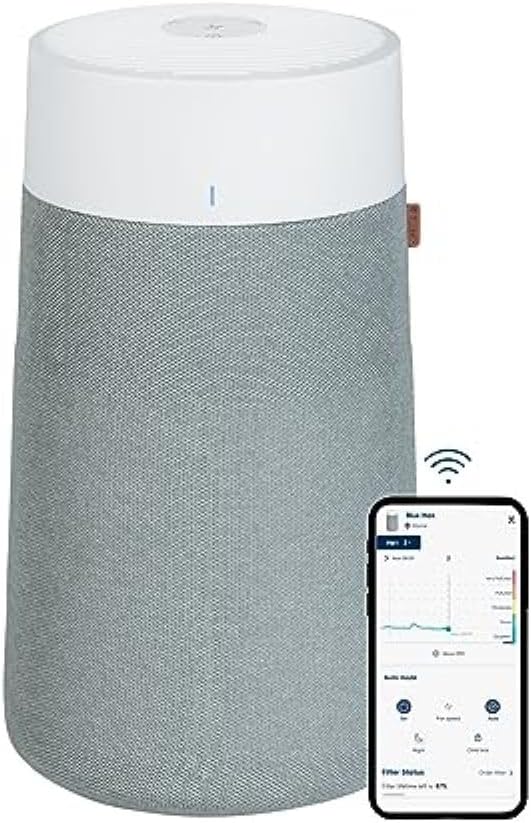
A strong all-rounder for allergy sufferers who want a reliable smart purifier without paying premium-brand money. It is especially good in medium rooms and handles everyday allergens well, with a quiet low setting for bedrooms. If you want detailed air-quality analytics it is not the most data-heavy option, but for cleaning performance and value it is hard to beat.
Gallery
Price and availability
Prices change often. Check the retailer for the latest deal.
| Best for | Bedrooms |
| Room Size | 48m2 |
| Noise | 19dB |
| Filter Type | HEPA |
| Price |
Pros and cons
Pros
- Covers medium rooms well (good for living rooms and bedrooms)
- Quiet low setting for sleep
- Smart control (app) with auto mode
- Good value for performance
- Washable pre-filter helps with pet hair and dust
Cons
- Replacement filters add ongoing cost
- App features are useful but not essential
- Not the best choice for very large open-plan spaces
- Air-quality data and reporting is not as advanced as premium models
FAQs
Is it good for allergies?
Yes. It is designed to capture fine airborne particles that commonly trigger allergies, and it performs well in everyday home conditions.
Is it quiet enough for a bedroom?
On low or night mode it is typically quiet enough for most people. High fan speeds are noticeably louder, like most purifiers.
How often do filters need replacing?
It depends on usage and indoor air quality. Many owners replace filters roughly every 6 to 12 months.
Does it help with pet hair?
It can help reduce airborne dander and fine particles. Visible pet hair is better handled by vacuuming plus the purifier as a support.
How we review
We compare air purifiers using consistent criteria: room coverage, filtration type, noise for bedrooms, and ongoing filter cost.
We aim to recommend options for different needs and budgets.
- Coverage suitability for typical rooms
- Filtration for allergens (HEPA and carbon where relevant)
- Noise levels for sleeping and working
- Ongoing filter replacement considerations
- Ease of use and maintenance